Iris Eekhout, PhD

Iris Eekhout, PhD

Statistician & Senior Scientist

TNO

Biography

Iris Eekhout holds a double master in clinical psychology and methodology and statistics of psychology (Leiden University). She obtained her PhD at the Department of Epidemiology and Biostatistics of the VU University medical centre in Amsterdam. Her dissertation work resulted in novel ways of dealing with missing data in questionnaire items and total scores. Currently, Iris teaches a course on missing data analysis in the epidemiology masters program at VU University medical centre. At TNO, Iris works on a variety of projects as a methodologist and statistical analyst related to child health, e.g., measuring child development (D-score) and adaptive screenings for psycho-social problems (psycat). Her main interests and expertise are missing data methods (multiple imputation), longitudinal (multilevel) modeling, R programming, developing shiny applications, interactive visualizations, psychometrics and measurement.

Interests
  • Missing data methods (multiple imputation)
  • Longitudinal (Multilevel) modelling
  • R programming/shiny apps
  • Psychometrics and measurement
Education
  • PhD in Epidemiology & Biostatistics, 2015

    VU University, Amsterdam

  • MSc in Methodology and Statistics, 2010

    Leiden University

  • MSc in Clinical Psychology, 2010

    Leiden University

  • BSc in Psychology, 2008

    Leiden University

Posts

Projects
*
Don’t Miss Out!
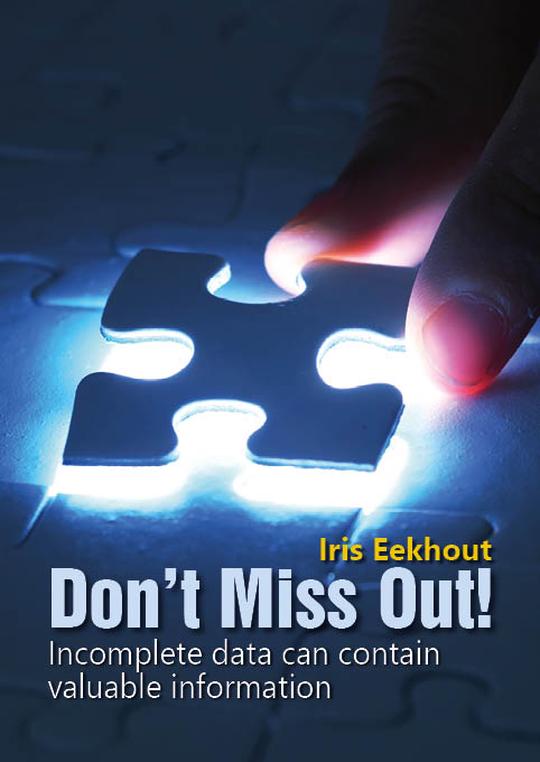
Missing data occurs in many empirical studies. It is vital for study results to handle the missing data correctly. The best solution to deal with missing data depends on the reasons for the occurrence of missing data and on the analysis that is planned. In the project a guide was developed to find the best way to deal with missing data in multi-item questionnaires. The website www.missingdata.nl also provides a lot of information about missing data and methodology.
Don't Miss Out!
D-score
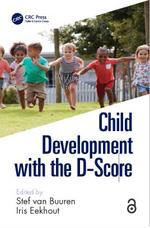
Children learn to walk, speak, and think at an astonishing pace. The D-score captures this process as a one-number summary. Application of the D-score enables comparisons in child development across populations, groups and individuals.
D-score
Rater agreement & reliability
In studies where more than one rater gives a judgement on a certain characteristic, the agreement between the judgements is of interest. Historically, mostly a kappa statistic is used to assess the agreement. However, the kappa statistic is a reliability measure instead of an agreement measure. It is more informative to use the percentage of absolute agreement instead. The reliability of ratings can also be obtained via different methods. The choice between the ICC oneway, ICC consistency and ICC agreement depends on the study design and goals.
Rater agreement & reliability

Publications

(2026). Effective Behavior Change Techniques for Successful Weight Loss and Weight Loss Maintenance Among Adults With Overweight and Obesity: A Systematic Review and Meta-Analysis. Obesity Reviews, pp. e70195.

(2026). GSED Core Model: A Unified D-score Scale for Early Child Development From Seven Sites. International Journal of Behavioral Development, pp. 01650254261451140.

(2026). Interactive Tool for Flexible Developmental Assessment in Youth Health Care. Studies in Health Technology and Informatics, (336), pp. 62–66.

(2026). Optimal timing for neonatal hearing screening in Well-Babies. International journal of neonatal screening, (12), pp. 7.

(2026). Teachers as Informant for Students’ Bullying Involvement: The Impact of Teacher Training on Agreement between Teacher vs. Self-and Peer Reports. International Journal of Bullying Prevention, pp. 1–11.

(2026). Van Wiechen Continu: het ontwikkelingsonderzoek in de JGZ 0-4 op elk moment, voor elk kind. JGZ Tijdschrift voor jeugdgezondheidszorg.

(2025). Enhancing comparability in early child development assessment with the D-score. International Journal of Behavioral Development, (49), pp. 348–364.

(2025). Proportion of cancer attributable to modifiable factors in the Netherlands in 2019: a secondary data analysis. BMJ Public Health, (3).

(2025). The measurement properties reliability and measurement error explained--a COSMIN perspective. Journal of clinical epidemiology, pp. 112058.

(2024). A study on the applicability of the Strengths and Difficulties Questionnaire among low-and higher-educated adolescents. Frontiers in psychology, (15), pp. 1289158.

Contact

    R Packages & shiny

    The projects highlighted on the website have R packages attached. The D-score project has multiple R packages available and several shiny application that demonstrate functionalities. The agreement project evolves around one R package and one shiny application.

    Reliability and Agreement

    • Agree: An R package with functions to compute the Reliability and Agreement between multiple raters.
    • ICC power: A shiny application that can assist sample size decisions for studies on reliability.

    Child development with the D-score

    Missing data